Why People Are Investing in Pokémon Cards in 2026?
26 May 2026 · Updated 3 June 2026

Gabriel Caetano
INTERNATIONAL
Why People Are Investing in Pokémon Cards in 2026?
Learn how Pokémon cards evolved from a childhood hobby into a multi-million-euro alternative investment market. This guide explores the key drivers of card values, grading, scarcity, risks, and investment strategies, helping collectors understand whether Pokémon cards deserve a place in a diversified portfolio.

Introduction
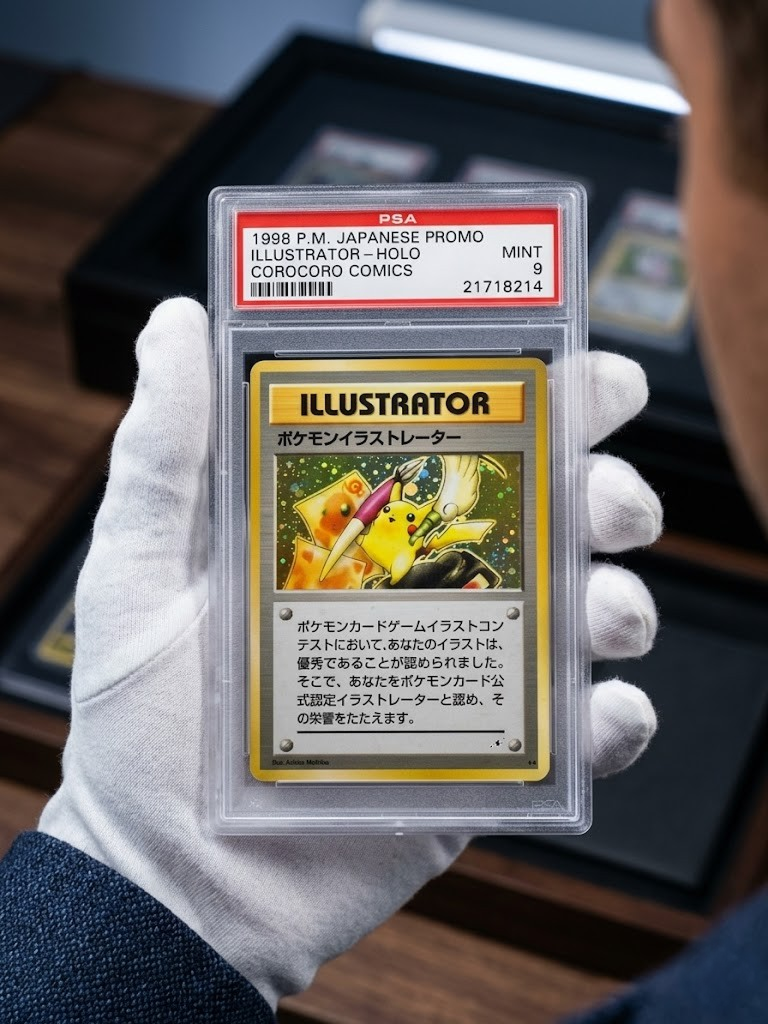
In 2024, a single Pikachu Illustrator card sold for over €4.8 million, making it the most expensive Pokémon card ever traded at auction. What was once a schoolyard hobby has matured into a serious alternative investment class, attracting everyone from casual collectors to hedge fund managers. Pokémon cards now sit alongside fine art, vintage watches, and rare wine in diversified portfolios.
This guide breaks down the market drivers, valuation mechanics, profit strategies, and real risks behind collectible card investing. Whether you are considering your first purchase or evaluating your existing collection's potential, you will find a grounded, data-backed analysis here. And if you are spending money on collectibles internationally, it is worth knowing how the right financial tools, like a card with 0% FX fees, can protect your margins on cross-border purchases.
1. The Pokémon Card Investment Boom:
How We Got HerePokémon cards first launched in Japan in 1996, arrived in North America by 1999, and spent 2 decades as a childhood staple before the investment world noticed. The pandemic changed everything. The boom in card sales accelerated during the pandemic as stimulus money and interest in alternative assets surged. Spending on non-sports trading cards, including Pokémon, jumped 350% between 2020 and 2025, according to market research firm Circana. Celebrity purchases from Logan Paul, Post Malone, and Kevin O'Leary turned pack openings into primetime entertainment.
The milestones kept piling up. A Charizard 1st Edition Base Set graded PSA 10 Gem Mint reached $550,000 at Heritage Auctions in December 2025. Then, a Pikachu Illustrator PSA 10 sold for $16.49 million in February 2026, becoming the most expensive trading card of any kind ever auctioned. January 2026 marked a "watershed moment" for the Pokémon TCG market, with average Pokémon cards rising 46% year-over-year. The broader trading card game market is expected to grow from $13.28 billion in 2025 to $24.36 billion by 2031, at a CAGR of 10.03%.
2. Why People Choose Pokémon Cards as Investments
Nostalgia as a Financial Force
Millennials and Gen Z grew up trading Charizards on the playground. Now that those same people have disposable income, they are buying back their childhood, often at prices they never could have imagined. This emotional premium is irrational by traditional valuation standards, but it is remarkably consistent. Celebrity purchases and nostalgia from millennials with disposable income have driven prices to record levels. Emotional attachment creates a floor of demand that many purely financial assets lack.
Tangible, Displayable Assets
Unlike a stock ticker, a graded Pokémon card can be displayed on a shelf, shown off at community events, and physically held. That tangibility appeals to collectors who want to see, touch, and enjoy what they own. Trading shows, local game stores, and Discord communities add a layer of social belonging that a brokerage account simply does not offer.
Low Barrier to Entry
Fine art, real estate, and classic cars require 5- to 7-figure entry points. You can start buying sealed Pokémon product or raw singles for as little as €5 to €50, grade them, and participate in the market meaningfully. Online marketplaces like eBay and TCGPlayer make buying and selling accessible to anyone with an internet connection.
3. Pokémon Cards vs. Traditional Investments
Before putting money into collectible card investing, it helps to understand how the asset class compares to more familiar options.
Criteria | Stocks & Bonds | Real Estate | Pokémon Cards |
|---|---|---|---|
Liquidity | High (seconds) | Low (weeks/months) | Medium (days/weeks) |
Regulation | Heavy | Heavy | None |
Correlation to markets | High | Moderate | Low |
Tangibility | No | Yes | Yes |
Entry cost | €1+ | €10,000+ | €5+ |
Passive income | Dividends/interest | Rent | None |
Counterparty risk | Broker-dependent | Title-dependent | Buyer-dependent |
Some owners are increasingly treating the popular 1990s and 2000s trading cards like alternative assets, with some of the rarest cards outperforming traditional benchmarks like the S&P 500 in recent years. But Pokémon cards produce no dividends, no interest, and no rental income. They are best suited as a small portfolio diversifier, not a primary investment vehicle. And they are not regulated by any financial body, so buyer protections are minimal.
If you want a portion of your savings to earn passively while you also collect, Bleap's savings vaults offer Steady at 3.65% AER (lowest risk) or Dynamic at 3.83% AER (low risk) in USD, with just a $1 minimum deposit and 0% withdrawal fees. A practical complement to an alternative investment allocation.
4. Why Pokémon Cards Increase in Value: The Demand Drivers
Pop Culture and Media Events
Every new anime series, video game release, or anniversary set sends demand rippling through the card market. The Pokémon card market is experiencing a bullish sentiment in early 2026, largely driven by the franchise's 30th anniversary and strategic product releases. The 25th anniversary in 2021 triggered massive price surges across vintage and modern sets alike, and the 30th anniversary is doing it again.
Influencer and Celebrity Effect
High-profile unboxings drive retail sell-outs overnight. Celebrities like Post Malone, Steve Aoki, and Kevin O'Leary fueled mainstream attention. Social media compresses price-discovery timelines. A card that might have taken months to appreciate can spike in hours after a viral TikTok or YouTube video.
Global Collector Community
International demand from Japan, the USA, and Europe means collectors across 3 continents compete for the same finite supply. When a Japanese-exclusive card catches the attention of Western collectors, the price moves fast. When you are buying from international sellers, every percent in transaction fees matters. Bleap's 0% FX fees mean you pay the real exchange rate on cross-border purchases, keeping your acquisition costs lower.
5. Scarcity and Supply: Why Rarity Fuels Price
The fundamental driver of rare Pokémon cards value is supply. The 1999 Base Set had a relatively small English print run compared to the millions of packs produced today. Roughly 10 billion Pokémon cards were produced during the fiscal year 2025/2026 alone, bringing the lifetime total to over 85 billion cards. That makes vintage cards, especially 1st Edition runs, exponentially scarcer by comparison.
Discontinued sets and out-of-print booster boxes act as value anchors. Once a set stops printing, sealed product becomes finite inventory that only declines over time as boxes are opened. Limited edition cards, tournament prizes, and regional exclusives amplify this effect. Tournament prizes, promotional cards, and low-print-run sets create extreme rarity. Some cards have fewer than 100 copies worldwide.
Pokémon card scarcity is also a deliberate brand strategy. Short-print secret rares in modern sets create engineered scarcity that keeps new collectors engaged. Pull rates of roughly 1 in 50 packs for Special Illustration Rares ensure that even fresh releases carry an element of genuine rarity.
6. The Most Expensive Pokémon Cards Ever Sold
Trophy cards set the price anchors that elevate the entire market. Here are the sales that redefined what a Pokémon card could be worth:
Pikachu Illustrator (PSA 10): The most expensive Pokémon card in the world is the Pikachu Illustrator PSA 10, sold for $16.49 million (approximately €15.3 million) on February 16, 2026 at Goldin Auctions. It is also the most expensive trading card in history, across all categories, as certified by the Guinness World Records. Only 1 PSA 10 exists among roughly 39 total cards.
1st Edition Shadowless Charizard (PSA 10): The 1st Edition Charizard Shadowless PSA 10 value in 2026 sits in the $350,000-$420,000 range, making it one of the most recognisable price benchmarks in the entire hobby. A PSA 10 hit $550,000 at Heritage Auctions in late 2025.
Trophy Pikachu No.3 Trainer: In May 2026, Goldin sold the single confirmed Trophy Pikachu No.3 Trainer for a winning bid of $1.45 million, totalling $1,769,000 after a 22% buyer premium.
Holographic Base Set Cards: The original 16 holographic Pokémon cards from the 1999 Base Set remain the foundation of high-end collecting. Holographic rarity matters because these cards were the original chase pulls, and PSA 10 Gem Mint copies are the holy grail because so few survive in that flawless state.
Auction houses like Heritage Auctions and Goldin have legitimised the market by bringing institutional-grade processes to card sales. Goldin Auctions and Heritage Auctions developed dedicated Pokémon departments. Heritage achieved $5.27 million in a single Pokémon sale in December 2025, a house record.
Collecting cards from international auctions? Every FX fee eats into your margins. Bleap charges 0% FX fees on every purchase, anywhere Mastercard is accepted, with no monthly subscription. Get the Bleap card →
7. Most Profitable Pokémon Cards Over Time
The numbers tell a compelling story. A sealed Base Set Booster Box that cost approximately €90 at retail in 1999 now sells for €30,000+ in verified condition. The trajectory of the 1st Edition Charizard alone illustrates the scale: roughly €9 at retail in 1999, now €300,000+ for a PSA 10 copy. The value has been on a steady upward trend since the 2023 trough.
Modern sleeper picks have also outperformed expectations. Umbreon saw 102.7% market cap growth in recent tracking periods, driven largely by the "Moonbreon" alternate art from Evolving Skies. Anniversaries create predictable appreciation windows, as the 25th and 30th anniversaries have both demonstrated. Savvy collectors who buy 6 to 12 months before a major anniversary and hold through the hype often capture the sharpest gains.
Meanwhile, if you want to grow the cash sitting alongside your card collection, Bleap's Dynamic savings vault offers 3.83% AER in USD with no lock-in, no withdrawal fees, and just a $1 minimum deposit. A practical way to earn on your uninvested funds while waiting for the next acquisition opportunity.
8. How Investors Actually Make Money from Pokémon Cards
Long-Term Holding ("Buy and Hold")
The simplest strategy: buy sealed booster boxes or high-grade singles, store them properly, and wait. Generational nostalgia cycles take 10 to 20 years to fully play out. Investors banking on the next wave of nostalgic adults are sealing product today and storing it in climate-controlled environments.
Short-Term Flipping
Buying at retail and reselling after hype events (new set releases, influencer mentions, tournament results) can yield quick profits. This requires market timing, trend awareness, and speed. The risk is that hype fades faster than you can list.
Card Grading Arbitrage
This is where the most consistent margin lives for mid-level investors. Buy raw (ungraded) cards cheaply, submit them to PSA or BGS, and sell the graded versions at a premium. PSA 10 graded cards are exponentially more valuable. A PSA 10 can be worth 10-100x more than the same card in PSA 7. The price gap between a PSA 9 and a PSA 10 on a desirable card can represent a 300 to 500% difference.
Sealed Product vs. Single Cards
Sealed product carries lower risk of condition surprises but requires more capital. Individual rare Pokémon cards offer higher upside but demand grading expertise and storage discipline. Most experienced investors hold a mix of both.
9. The Role of Card Grading in Investment Value
Card grading is the backbone of the Pokémon card investment market. The 3 primary services are PSA (Professional Sports Authenticator), BGS (Beckett Grading Services), and CGC (Certified Guaranty Company). Each assigns a numerical grade from 1 to 10 based on centring, surface quality, corners, and edges.
The financial impact is massive. A 1999 Charizard Base Set 1st Edition PSA 10 hit $550,000 at Heritage Auctions in late 2025, while PSA 9 copies of the same card trade between €40,000 and €75,000. That is a 7 to 13x premium for a single grade point.
The card grading investment workflow is straightforward: source raw cards, submit to a grading company, wait for the return, and sell the graded product. But grading backlogs and turnaround times are a hidden cost. PSA's standard turnaround can run 3 to 6 months, and express services cost significantly more. Population reports, which show how many copies of a card exist at each grade, are critical. Low PSA 10 populations on rare cards magnify value because they quantify just how scarce "perfect" condition truly is.
10. The Real Risks of Pokémon Card Investing
Market Volatility and the Pokémon Card Bubble Debate
The Pokémon card bubble conversation is not new. The cards that suffered most during the 2021-2023 correction were those most inflated by speculation: mid-grade copies (PSA 6-8), mass-printed modern cards, and recent sealed product. Vintage cards in PSA 9-10, trophy cards, and iconic illustrations not only held, but resumed their upward trajectory by 2024. Risks include price volatility (30 to 50% declines between 2021 and 2023), limited liquidity, and conservation costs.
Liquidity Risk
Unlike stocks, which sell in seconds, finding a buyer for a high-value card at your asking price can take days, weeks, or months. Illiquidity is the hidden cost of this asset class. The market for the most expensive cards is limited to a small pool of wealthy buyers.
Counterfeits and Fraud
Advanced forgeries now replicate holographic foils and micro-text, eroding buyer confidence. Due diligence is essential: buy from authenticated sellers, use grading services, and be sceptical of deals that look too good to be true.
Speculation vs. Fundamentals
Distinguishing hype-driven spikes from genuine long-term value is the core skill of Pokémon card speculation. The same forces driving gains also create risk. Prices are volatile, heavily influenced by hype, and card prices lack the stability and track record of traditional markets.
Storage and Condition Risk
Sun damage, humidity, and improper storage degrade card condition over time, directly reducing value. A PSA 10 stored carelessly can become a PSA 8. Climate-controlled storage, penny sleeves, and top-loaders are non-negotiable for serious investors.
11. Who Is Investing: The Millennial and Gen Z Factor
Millennials and Gen Z are the primary demand engine behind the Pokémon card market. Childhood ownership creates an emotional attachment to the asset class that no amount of marketing can replicate. The market is driven by an expanding collector base, nostalgia, and the integration of entertainment, strategy, and social interaction.
There is also a growing distrust of traditional financial markets among younger investors, pushing them toward tangible alternatives they understand and enjoy. Social media investment communities on Reddit, TikTok, and Discord amplify trends and compress discovery timelines. As millennials reach their peak earning years, discretionary collectible spending rises. This is a generational wealth-transfer story playing out in real time.
12. Key Takeaways: Is Pokémon Card Investing Worth the Risk?
The honest answer: there is genuine upside potential, but the risks are significant. Pokémon card investing is best suited as a small alternative allocation within a diversified financial approach, not as a primary strategy.
Core principles for cautious investors:
- Focus on proven vintage Pokémon cards (Base Set, Jungle, Fossil, Neo series)
- Prioritise PSA graded cards, especially low-population PSA 10s
- Avoid panic buying during hype cycles
- Buy what you love, so even if the market dips, you own something you value
- Never invest money you cannot afford to lose
The most successful collector-investor profile combines passion, knowledge, and patience. If you are spending on cards, whether domestically or from international sellers, pair your purchases with Bleap's Mastercard for 0% FX fees and up to 20% cashback. Every euro saved on transaction fees is an euro that can go toward your next acquisition.
Your card collection earns nothing while it sits in storage. Your cash does not have to. Bleap's Dynamic vault pays 3.83% AER (low risk) in USD, with just $1 minimum and 0% withdrawal fees. Steady vault offers 3.65% AER (lowest risk). EUR coming soon. Open a Bleap account →
Frequently Asked Questions
What makes rare Pokémon cards so valuable?
Scarcity, condition, and cultural significance are the 3 pillars of value. Cards with low print runs, strong grading (PSA 9-10), and iconic Pokémon like Charizard or Pikachu command the highest premiums. Scarcity, nostalgia, and perfect grading keep driving prices sky-high, especially for cards with tiny PSA 10 populations.
What is a PSA graded card and why does it matter for investing?
PSA (Professional Sports Authenticator) evaluates cards on a 1-10 scale based on centring, surface, corners, and edges. A PSA 10 (Gem Mint) grade authenticates a card's condition and can multiply its value by 10 to 100x compared to the same card in lower grades. For investors, graded cards provide a trusted standard that makes buying and selling more transparent.
Is the Pokémon card market a bubble that's about to burst?
The market already experienced a significant correction between 2021 and 2023, with some cards declining 30 to 50%. The Pokémon TCG market has exited its correction phase and entered an era of maturity. Speculators have left, collectors have stayed, and new structures are emerging to professionalize the ecosystem. The key distinction: speculative modern cards are vulnerable, while fundamentally scarce vintage cards have historically recovered and set new highs.
How do I start investing in Pokémon cards with a small budget?
Start with modern holographic Pokémon cards or sealed booster packs from sets with strong collector appeal. Buy raw cards from collections, learn to evaluate condition, and submit promising ones for grading. Entry points as low as €10 to €50 exist for raw singles with PSA 10 potential. Focus on learning before scaling.
Which Pokémon cards have the highest long-term investment potential?
Vintage Pokémon cards from the Base Set, Jungle, Fossil, and Neo series consistently lead. 1st Edition prints with low PSA 10 populations are the most resilient. First Edition shadowless holos and those elusive Gold Stars from the EX era remain incredibly tough to find. Veteran collectors chase them for the history, while newer investors see them as blue-chip assets that hold value through market swings.
Are Pokémon cards a better investment than stocks?
They are a complementary alternative investment, not a replacement. Stocks offer regulation, liquidity, dividends, and a decades-long track record. Pokémon cards offer low market correlation and tangible ownership but carry illiquidity risk, no passive income, and no regulatory protection. The best approach is treating cards as a small percentage of a broader financial plan, not the plan itself.
Conclusion: The Future of Pokémon Card Investing
The core drivers are clear: nostalgia, scarcity, a massive global community, and a maturing grading infrastructure that brings transparency to what was once an opaque hobby. Pokémon cards are a genuine investment vehicle for those who understand the space, and a speculative risk for those who do not.
With the 30th anniversary fuelling demand in 2026 and future game releases, anime seasons, and anniversary sets on the horizon, catalysts for price movement are not going away. But the fundamentals still apply: do thorough research, buy what you love, and never invest money you cannot afford to lose.
If you are spending on cards internationally, whether from Japanese auction houses or European sellers, pair your purchases with Bleap for 0% FX fees, up to 20% cashback, and no monthly subscription. It is a debit card you can use anywhere Mastercard is accepted. And if you want the uninvested portion of your funds to work for you, Bleap's savings vaults offer up to 3.83% AER in USD with a $1 minimum deposit and no lock-in.
A smarter way to spend, send, earn and trade

- international


